
Imagn
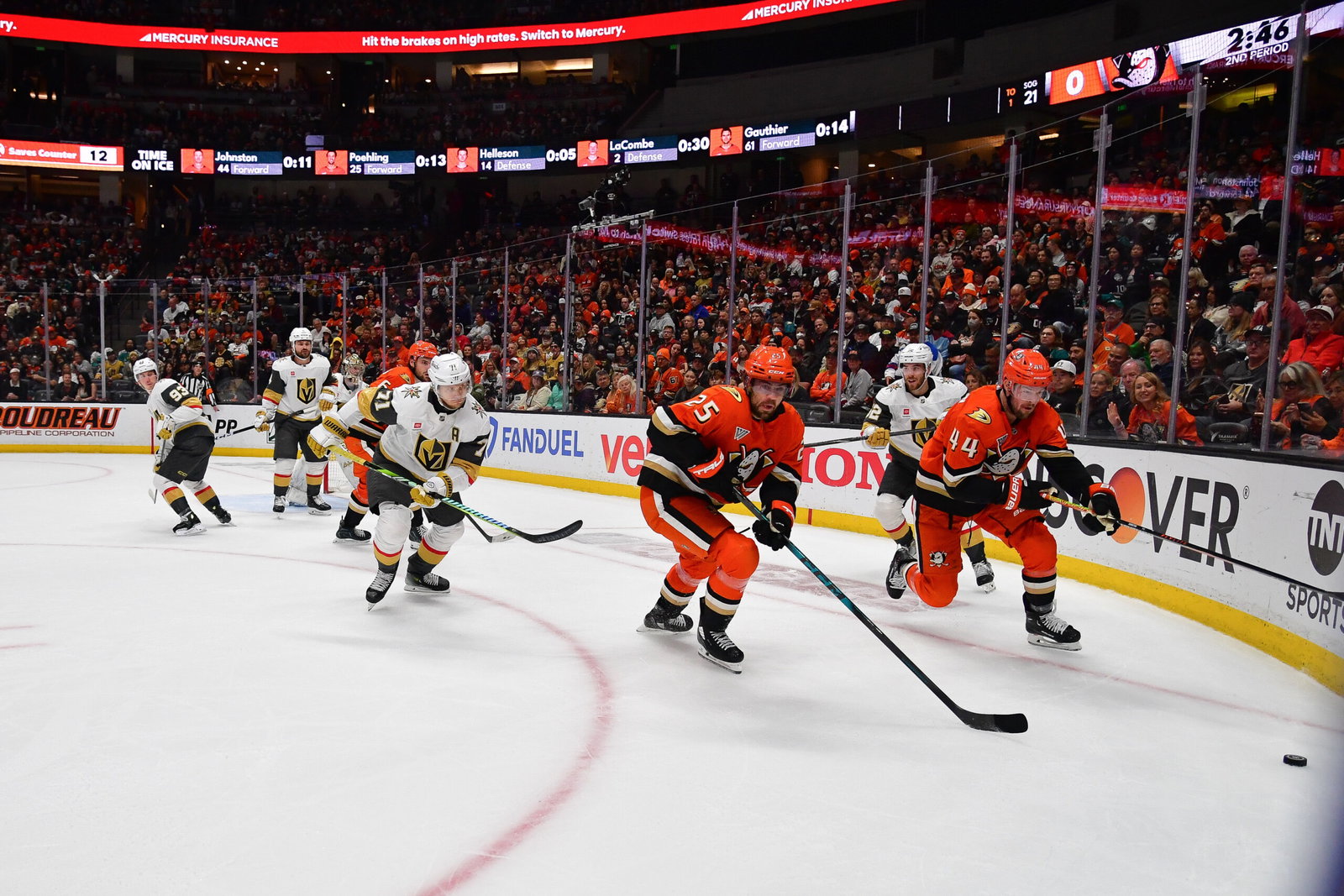
May 8, 2026; Anaheim, California, USA; Anaheim Ducks center Ryan Poehling (25) and left wing Ross Johnston (44) play for the puck against Vegas Golden Knights center William Karlsson (71) during the second period in game three of the second round of the 2026 Stanley Cup Playoffs at Honda Center. Mandatory Credit: Gary A. Vasquez-Imagn Images
Chicago Sun-Times Blackhawks reporter Ben Pope went on X to clear up a common misunderstanding about NHL offer sheets. This discussion arose right after the Philadelphia Flyers signed Anaheim center Leo Carlsson to a one-year deal on July 3.
Pope argued the term 'offer sheet' itself is part of that confusion, since it makes an already finished agreement that still sounds like an open bid, waiting for the player.
An offer sheet is a contract that a restricted free agent has already signed with a team other than his own. Once that's done, the player's current team has seven days to match the terms and keep him, or decline and receive another draft pick in compensation based on the contract value.
Pope laid out the issue plainly in his X post. "When I'm the next NHL commissioner, the first thing I'm doing is changing the term 'offer sheet' to something else. Way too many fans understandably think offer sheets are OFFERS to the player, not an agreement between the team and player. The player has to accept the offer!"
The explanation does matter because it separates offer sheets from trades. In a trade, a player under contract is moved directly between two teams, and aside from players with no-trade or no-movement protection, he won’t have any say in the move or the destination and won't sign anything new.
But here, an offer sheet works differently. The player and the new team agree to terms first, and only then does the original team get to decide whether to match or let him leave.
Carlsson's five-year, $18 million annual deal with Philadelphia was already signed by him before the Ducks even got to have any say in it. This leaves Anaheim until July 10 to match it or take four first-round picks in return.
Only the restricted free agents who are done with their entry-level contracts and have received a qualifying offer from their current team are eligible to receive an offer sheet in the first place.
What the Ducks could do
The Carlsson case shows why such explanations matter here. Anaheim’s general manager, Pat Verbeek, is the one who has to decide whether to match.
An article from PhillyHockeyNow.com explains what the Ducks could do. It explains how once a player signs an offer sheet, he can't be traded away. The Flyers can only send back draft picks, but not players, as compensation.
That hasn't stopped people from wondering if there’d be another way to work around it. Back in 1997, the Flyers signed Chris Gratton to an offer sheet from the Tampa Bay Lightning. And Tampa Bay chose not to match it.
The Lightning first tried to trade Gratton instead of just taking the picks, but the league blocked that. They later traded the picks back to Philadelphia for two other players instead.
Some people around the league think the Flyers could try something similar to this now. The four first-round picks in the future could end up being worth less if Carlsson actually exceeds everyone’s expectations.
Philadelphia does have a few players who could catch the interest of Anaheim. The Ducks have been weak on their defence lately. Philadelphia players like defensemen Rasmus Ristolainen and Cam York and forward Owen Tippett can help with that.
For now, the Ducks have to decide if Carlsson's value as a 21-year-old top center is worth matching an $18 million cap hit.
Read more at NHL Fan Central!
Written by

Aadhya Nalla
Edited by

Suyashdeep Sason